
Built to Run Further. Built to Run Stronger.
Why Runners and Ultramarathon Athletes in Gilbert, AZ Are Making Chiropractic Care a Non-Negotiable Part of Their Training
Centric Chiropractic | Gilbert, AZ | Serving Runners Across the East Valley: Chandler, Mesa & Queen Creek
You are not here because your back hurts and you want someone to pop it. You are here because you are a runner — maybe a serious one — and you want to know if chiropractic care can actually move the needle on your performance, your recovery, and your longevity in this sport.
The answer is yes. And the reasons go a lot deeper than most people expect.
The Phoenix metro area — including Gilbert, Chandler, Mesa, and Queen Creek — is one of the most active running communities in the country. We have year-round training weather, a thriving trail running scene in the San Tan Mountains and beyond, race calendars packed with half marathons, marathons, and ultra-distance events, and a growing population of runners who are pushing their bodies harder and smarter than ever before.
At Centric Chiropractic in Gilbert, Arizona, we work with runners at every level — from recreational 5K runners logging their first consistent miles to competitive ultramarathon athletes managing 90-plus-mile training weeks on desert trails. What we know from working with this population is this: the runner who trains the most is not always the runner who performs the best. The runner who performs the best is the one whose body is functioning with the least mechanical interference and the most neurological efficiency.
That is exactly what chiropractic care delivers.
This post is for the runner who wants to understand their body at a deeper level, perform at a higher level, and build a running career that lasts for decades. Let’s get into it.
The Truth About What Running Actually Does to Your Body
Running is one of the most biomechanically demanding activities a human body can perform at volume. Every mile you log subjects your body to approximately 1,500 to 1,700 ground reaction force events — each one sending a force through your foot, ankle, knee, hip, and spine equal to two to three times your body weight.
At a training volume of 40 miles per week, that means your spine and lower extremity joints are absorbing and dissipating somewhere between 60,000 and 70,000 high-load impacts. For an ultramarathon athlete logging 70 to 100 miles per week during a build phase, those numbers are staggering.
Your body is extraordinarily well designed to handle this kind of demand — but only when the entire kinetic chain is functioning correctly. The moment compensation patterns develop, joint restrictions emerge, or the nervous system is operating under interference, the elegant efficiency of human running mechanics breaks down. And when mechanics break down at high volume, overuse injuries follow.
The most common running injuries we see in Gilbert and across the East Valley — IT band syndrome, runner’s knee, plantar fasciitis, Achilles tendinopathy, shin splints, hip flexor strains, stress fractures, and sacroiliac joint dysfunction — are almost never random. They are the predictable outcome of mechanical dysfunction compounding over time and mileage.
📊 A 2024 meta-analysis in the Journal of Sports Medicine found that athletes receiving regular chiropractic care experienced 23% fewer injuries and returned to full training 31% faster than athletes using conventional treatment alone.
Chiropractic care does not treat running injuries. What it does is work on the structural and neurological foundation your running performance is built on — restoring the mechanical and neurological conditions the body needs to function well, adapt to training load, and stay resilient over miles and years.
Searching for a “chiropractor for runners in Gilbert AZ,” “running injury treatment Gilbert,” or “sports chiropractor East Valley AZ?” Centric Chiropractic provides performance-focused, running-specific chiropractic care for athletes throughout Gilbert, Chandler, Mesa, and Queen Creek.
The Nervous System Advantage: Why This Is About More Than Your Spine
Most runners who think about chiropractic think about their back. And while spinal health is absolutely central to what we do, the more important conversation for a performance-focused runner is about the nervous system.
Your nervous system is the operating system of your body. It controls every muscle contraction, every stride cycle, every proprioceptive signal from your feet to your brain, every hormonal response to training load, and every recovery process that happens between training sessions. Your heart rate, your breathing efficiency, your gut function during a long effort, your ability to thermoregulate on a hot Arizona trail run — all of it is coordinated by the nervous system.
The spine is the physical housing for the spinal cord — the superhighway of the nervous system. When the joints of the spine are moving freely and in proper alignment, nerve signals travel without interference. When spinal joints are restricted, compressed, or misaligned — what chiropractors call subluxations — those nerve signals are attenuated. The light dims. The signal degrades.
For a runner, this has direct performance implications:
· Reduced proprioceptive acuity — your brain’s real-time map of where your body is in space becomes less precise, leading to subtle gait inefficiencies and increased injury risk
· Compromised motor control — the firing patterns of the muscles that stabilize your pelvis, hip, and knee become less coordinated, increasing mechanical stress on passive structures
· Slower neuromuscular response times — the gap between stimulus and muscular response widens, affecting foot strike mechanics, reactive balance, and ground contact time
· Impaired autonomic regulation — the branch of the nervous system that governs heart rate variability, respiratory efficiency, and recovery can be affected by chronic spinal dysfunction
· Diminished recovery capacity — when the nervous system is operating under interference, the body’s ability to downregulate from a sympathetic (fight-or-flight) state is impaired, slowing recovery between runs
Chiropractic adjustments restore normal joint motion and alignment, remove mechanical irritation from the nervous system, and allow the body’s own regulatory systems to operate at full capacity. Research from Palmer College of Chiropractic documented a 30% improvement in hand-eye coordination in athletes after 12 weeks of regular chiropractic care — a finding that reflects meaningful improvements in overall nervous system processing speed and accuracy (Palmer College, 2021).
For endurance athletes, where the margin between peak performance and breakdown is paper-thin, optimizing nervous system function is not a luxury. It is a competitive advantage.
📊 Research shows chiropractic care improves proprioception — your body’s ability to sense movement and position — leading to better coordination and reduced injury risk (Journal of Chiropractic Medicine).
📊 A study in the Journal of Chiropractic Medicine found specific adjustments to the hip and sacroiliac joints significantly improved hip extension — a mechanical refinement that supports a longer, more efficient stride.
The Runner’s Kinetic Chain: How One Restriction Becomes an Injury Two Joints Away
One of the most important concepts for any serious runner to understand is the kinetic chain. Your body does not move in isolated segments. Every joint, muscle, and fascial structure is mechanically linked to everything above and below it. A restriction in one area forces compensation in another — and that compensation is where overuse injuries are born.
Here is a classic example that plays out in our Gilbert clinic regularly:
A runner comes in with IT band syndrome — that sharp, burning pain on the outside of the knee that kicks in around mile 8 and gets progressively worse. The conventional response is to foam roll the IT band, stretch the hip flexors, and take some time off. Sometimes that helps temporarily. But the runner comes back because the IT band syndrome keeps returning.
Why? Because the IT band is not the problem. It is the victim. The problem is almost always somewhere up the kinetic chain: a restricted sacroiliac (SI) joint or a laterally tilted pelvis that is loading the iliotibial band asymmetrically on every single stride. Until the pelvic restriction is identified and corrected with a specific, targeted adjustment, no amount of foam rolling is going to solve the problem.
This is the kinetic chain in action — and it is why chiropractic care, which takes a whole-body, biomechanics-first approach to assessment, is such a powerful tool for runners.
Common kinetic chain breakdowns we identify and correct in runners at our Gilbert chiropractic clinic:
· Restricted sacroiliac joints — driving IT band syndrome, hip pain, and asymmetrical pelvic loading
· Lumbar spine restrictions — reducing hip extension range of motion and forcing the runner into an overstriding pattern
· Thoracic spine hypomobility — limiting the counter-rotation of the trunk that contributes to forward propulsion
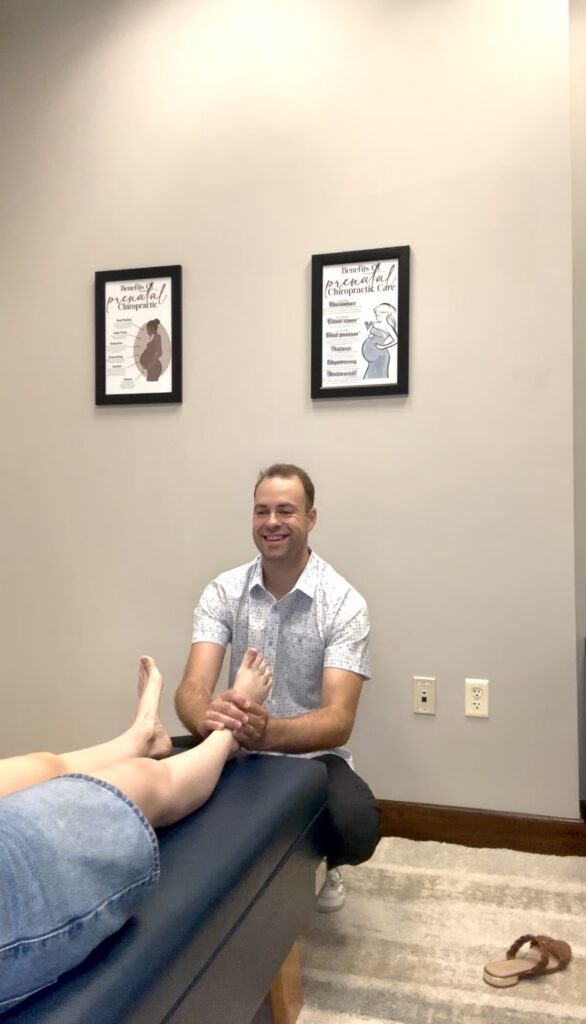
· Restricted ankle dorsiflexion — altering foot strike mechanics and loading the knee and hip in compensatory patterns
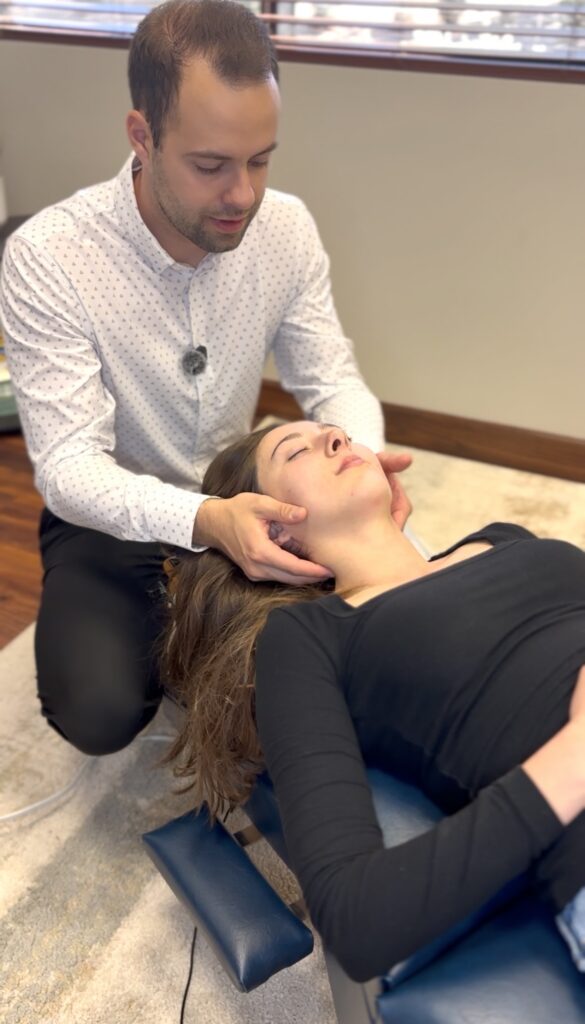
· Cervical and upper thoracic restrictions — affecting head position, breathing mechanics, and the arm swing that drives stride rhythm
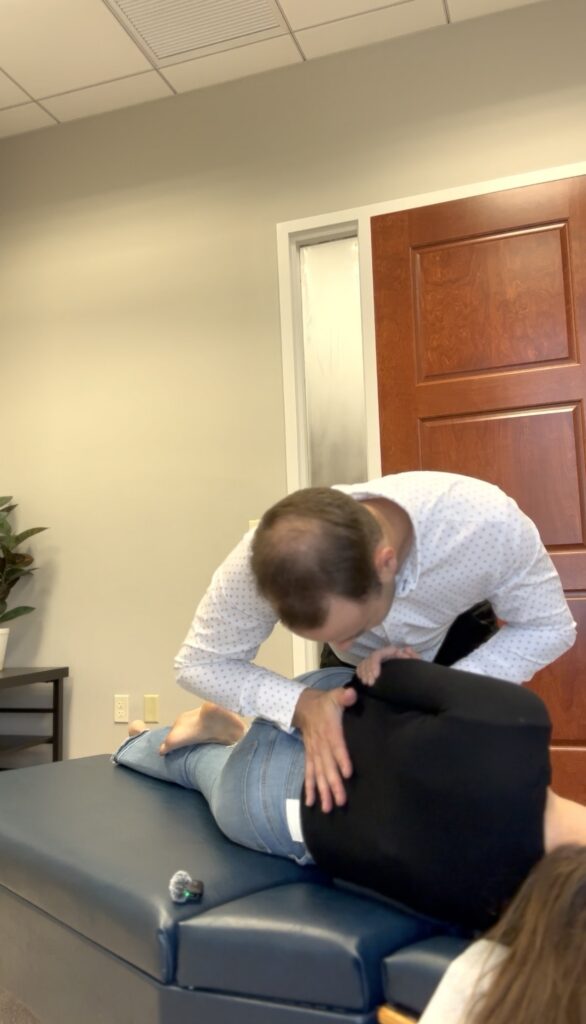
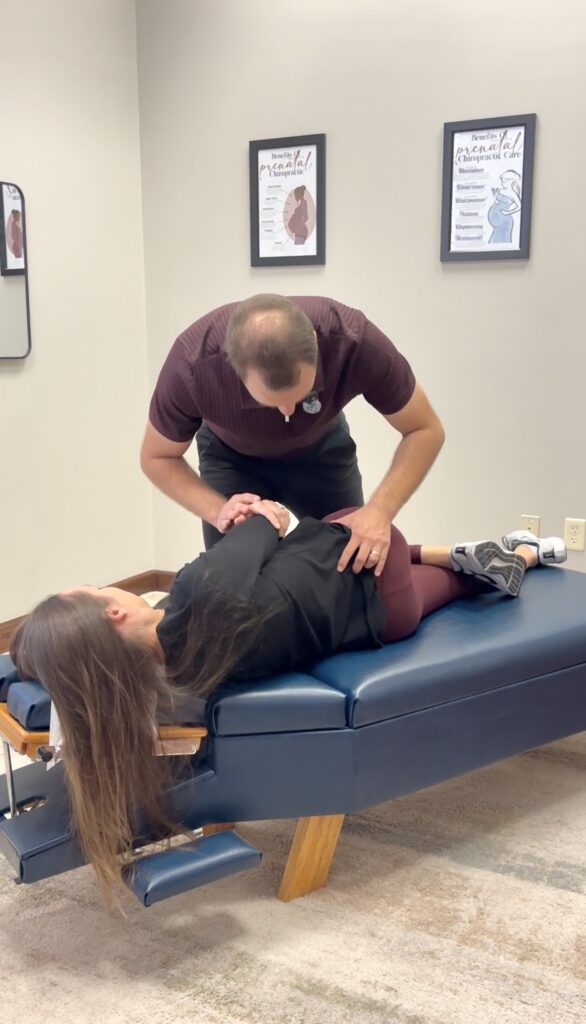
A specific, targeted chiropractic adjustment to a restricted joint works by restoring proper motion to that joint, allowing the compensating structures above and below it to unload, and resetting the mechanical efficiency of the entire kinetic chain. Chiropractic does not treat the injury — it removes the structural and neurological conditions that set the stage for injury in the first place.
The Most Common Running Injuries — and the Chiropractic Connection
Let’s get specific. Here is how chiropractic care works on the structural and neurological components underlying the most common running injuries — not to treat those conditions directly, but to remove the mechanical dysfunction that makes the body vulnerable to them in the first place:
🦵 IT Band Syndrome
IT band syndrome is the most common overuse injury in distance runners, and it is almost universally driven by pelvic and hip mechanics rather than the IT band itself. Restricted SI joints, hip abductor weakness secondary to neurological inhibition, and lateral pelvic tilt all contribute to excessive iliotibial band tension. Chiropractic works on the structural components driving that dysfunction — restoring SI joint and lumbar mobility so the body is no longer operating in the mechanical conditions that make IT band syndrome likely.
👟 Plantar Fasciitis
Plantar fasciitis is the bane of high-mileage runners. The plantar fascia is mechanically loaded with every foot strike, and when ankle dorsiflexion is restricted or subtalar joint mechanics are off, the fascia bears disproportionate tensile stress. Chiropractic works on the structural components upstream — restoring talocrural and subtalar joint motion, normalizing calcaneus position, and correcting pelvic and lumbar restrictions that alter gait mechanics — giving the body the mechanical environment it needs to absorb load correctly and reduce that disproportionate tissue stress.
“I had plantar fasciitis for 8 months. Tried everything. A friend in my running group suggested seeing a chiropractor here in Gilbert. First visit, the doc found a restriction in my ankle and low back I didn’t even know I had. Three weeks later I was back to full mileage.” — Recreational runner, Gilbert, AZ
🦵 Runner’s Knee (Patellofemoral Pain Syndrome)
Patellofemoral pain — the diffuse ache under or around the kneecap that worsens on descents and stairs — is almost always a biomechanical problem driven from above and below the knee. Hip drop (Trendelenburg gait) from a poorly firing glute medius, restricted hip internal rotation, and altered foot strike all converge at the knee. Chiropractic assessment evaluates the entire lower extremity kinetic chain and applies specific, targeted corrections at the joints driving the dysfunction — not just the joint that hurts.
🦴 Sacroiliac (SI) Joint Dysfunction
SI joint pain is extremely common in runners and is frequently misdiagnosed as lumbar disc pathology or hip joint pathology. The SI joints bear enormous torsional load during running — particularly during the single-leg stance phase when the pelvis is transferring force from the ground up through the lumbar spine. Specific chiropractic adjustments to the SI joint restore proper motion, reduce the associated gluteal and piriformis tension that compresses the sciatic nerve, and dramatically improve pelvic stability and symmetry.
🦵 Shin Splints (Medial Tibial Stress Syndrome)
Shin splints develop when tibial stress exceeds the bone’s adaptive capacity — but the loading pattern matters as much as the volume. Overpronation, restricted ankle mobility, and pelvic asymmetry all increase tibial stress on a per-stride basis. Chiropractic works on those structural components — restoring ankle mobility, normalizing pelvic alignment, and reducing the per-stride mechanical loading that makes the tibia vulnerable. The goal is not to treat the shin but to remove the conditions that are concentrating stress there.
🦶 Achilles Tendinopathy
The Achilles tendon stores and releases energy like a spring with every foot strike — and it is an extraordinarily efficient structure when the ankle and subtalar joints are moving well. When ankle dorsiflexion is restricted, the Achilles is forced to work through a shortened range under higher load — a combination that drives tendinopathy over time. Chiropractic works on the structural component driving that problem: restoring dorsiflexion at the ankle and midfoot so the tendon is no longer being asked to function at a mechanical disadvantage on every single stride.
🦴 Hip Flexor Strains and Hip Impingement
Runners who log big miles — especially on flat roads or treadmills — develop predictable hip flexor tightness and anterior pelvic tilt patterns that load the hip joint in impingement positions and reduce hip extension in late stance. Reduced hip extension forces the runner to compensate by overstriding — increasing braking forces, reducing running economy, and loading the lumbar spine. Chiropractic works on the structural components underlying that pattern: restoring lumbar and pelvic alignment so the hip can move through its full range and the overstriding compensation is no longer necessary.
🧠 Stress Fractures
Stress fractures represent the far end of the overuse injury spectrum, and they are largely a consequence of localized mechanical overload — stress being concentrated in one area of bone because the kinetic chain is not distributing force evenly. Pelvic tilt, SI joint asymmetry, and restricted ankle mechanics all create predictable asymmetrical loading patterns. Chiropractic works on those structural components proactively — maintaining pelvic level, spinal alignment, and lower extremity joint symmetry so the body is distributing ground reaction forces the way it was designed to, rather than funneling them into a single vulnerable structure.
Dealing with “IT band pain Gilbert AZ,” “plantar fasciitis treatment near me East Valley,” “runner’s knee chiropractor Chandler,” or “SI joint pain from running Gilbert?” Centric Chiropractic identifies the kinetic chain dysfunction driving your injury — and corrects it at the source.
Ultramarathon Running: When the Demands Are Amplified, the Margins Get Smaller
If standard marathon training puts significant demands on the musculoskeletal and nervous system, ultramarathon training and racing amplifies those demands by an order of magnitude. Whether you are racing a 50K on the San Tan Mountain trails, running a 100-miler in the desert Southwest, or logging back-to-back long runs through an Arizona training block, the physiological and structural stress of ultra-distance running is in a category of its own.
Here is what makes ultra running different — and why chiropractic care is especially valuable for this population:
Cumulative Fatigue and Mechanical Breakdown
In a marathon, most runners reach significant fatigue in the final 6 miles. In a 100-miler, significant fatigue may arrive at mile 40 — with 60 miles still to go. As neuromuscular fatigue accumulates, running mechanics deteriorate. Stride length shortens, hip drop increases, lateral trunk lean develops, and the kinetic chain begins compensating in ways that dramatically increase injury risk and reduce efficiency. Runners who enter a race with restricted joints and neurological interference reach this mechanical breakdown point earlier and more severely than runners whose bodies are structurally and neurologically optimized.
Regular chiropractic care during a training build maintains the structural foundation that allows running mechanics to stay intact deeper into long efforts — which is the difference between finishing a 100-miler strong and blowing up at mile 60.
Recovery Between Efforts
Ultra training frequently involves back-to-back long runs — a 20-miler on Saturday, a 12-miler on Sunday — or high-volume weeks where recovery between sessions is compressed. The nervous system’s ability to shift from a sympathetic (high-alert, training) state to a parasympathetic (rest, recovery, rebuild) state is critical for managing this kind of load.
Chiropractic adjustments have been shown to directly influence autonomic nervous system tone — supporting a shift toward parasympathetic dominance that enhances recovery. For ultra runners managing heavy training loads, this translates to less systemic fatigue, faster muscle repair, and better readiness heading into the next session.
Terrain-Specific Demands
Trail ultra running in the East Valley — including the San Tan Mountains, the Superstition Wilderness, and the White Tank Mountains — places demands on the ankle, subtalar joint, and lower extremity proprioceptive system that road running simply does not replicate. The constant micro-adjustments required to navigate rocks, roots, camber, and elevation change require an extraordinarily well-calibrated proprioceptive system.
When the joints of the ankle, knee, hip, and spine are restricted and the nervous system is operating under interference, the proprioceptive precision required for technical trail running is compromised. Specific chiropractic adjustments restore joint mobility and remove the neurological interference that dulls proprioceptive signaling — giving trail runners sharper reflexes, better balance, and more confident footing on technical terrain.
Race Week and Race Day Optimization
Many competitive ultra runners include a specific pre-race chiropractic adjustment as part of their race week protocol — the same way they taper their mileage and dial in their nutrition. A targeted adjustment in the days before a race ensures the pelvis is level, the SI joints are moving freely, the lumbar and thoracic spine are unrestricted, and the nervous system is operating without interference heading into the starting line.
Post-race chiropractic care — in the days following a 50K, 50-miler, or 100-miler — helps the body reset from the cumulative structural stress of a long race, addresses any acute joint dysfunction that developed during the effort, and accelerates the return to full training capacity.
“I’ve run six 100-milers. Chiropractic care has been part of my protocol for the last three years. The difference in how quickly I recover and how consistent my training blocks are has been night and day. I wish I’d started sooner.” — Ultra runner, East Valley, AZ
Increasing Your Capacity as a Runner: The Performance Case for Chiropractic
Everything we have covered so far has been largely about injury prevention and recovery. But the conversation that often gets a runner’s attention is the performance side of the equation.
Here is the performance case for chiropractic care, broken down by mechanism:
Running Economy
Running economy — the oxygen cost of running at a given pace — is one of the strongest predictors of distance running performance. It is largely determined by how efficiently your body moves through each stride cycle. Joint restrictions, compensatory movement patterns, and suboptimal pelvic alignment all increase the energetic cost of each stride. A specific adjustment that restores proper hip extension range of motion, levels the pelvis, and removes lumbar restriction allows the runner to cover the same ground with less metabolic cost. Over the course of a marathon or ultra, that efficiency compounds into meaningful time improvements.
Stride Mechanics and Hip Extension
A study published in the Journal of Chiropractic Medicine found that specific adjustments to the hip and SI joints significantly improved hip extension range of motion — a direct mechanical improvement that lengthens the power phase of the running stride. More hip extension means more ground clearance, a longer effective stride, and better propulsive force per step. For runners who have been told their “form is off” or that they have a “short stride,” restricted hip extension secondary to lumbar and SI joint dysfunction is often the underlying cause that no amount of stretching alone can fully correct.
Neuromuscular Efficiency and Motor Patterns
When the nervous system is clear of interference and the joints are moving correctly, the motor patterns your brain uses to coordinate the running stride are more precise and more efficient. Muscle activation timing improves. The sequencing of hip stabilizer and core engagement that keeps the pelvis level through each stride cycle becomes more automatic. The neurological overhead of managing compensatory patterns decreases. The result is a runner who feels more fluid, more powerful, and less fatigued at a given pace.
Training Consistency
The most powerful performance variable in distance running is training consistency. The runner who can string together 8 uninterrupted weeks of quality training will almost always outperform the runner who logs 8 weeks punctuated by 3 weeks of injury management. Chiropractic care’s most significant contribution to performance is often simply this: keeping you healthy enough to train consistently, at the volume and intensity your goals require.
📊 90% of elite and professional athletes — including Olympic marathon runners — incorporate chiropractic care as a regular part of their performance and recovery protocol.
What a Runner-Specific Chiropractic Care Plan Looks Like at Centric Chiropractic
When a runner comes to our Gilbert clinic, we do not apply a generic protocol. We build a care plan around your sport, your training load, your race calendar, and your specific biomechanical findings. Here is what that process looks like:
Step 1 — Runner Intake and Training History. We want to know your weekly mileage, your surface mix (road, trail, track), your current training phase, your injury history, your race goals, and what has and has not worked for you in the past. This context shapes everything about how we approach your care.
Step 2 — Biomechanical and Postural Assessment. We assess the alignment and mobility of your entire spine, pelvis, SI joints, hips, knees, and ankles. We look for restrictions, asymmetries, and compensatory patterns that are either already creating symptoms or building toward future injury.
Step 3 — Specific, Targeted Adjustments. Based on your assessment, we deliver precise, targeted chiropractic adjustments to the specific joints that are restricted and contributing to your dysfunction. Nothing generic. Everything specific to what your body needs on that visit.
Step 4 — Training-Integrated Care Plan. We build a care schedule that works around your training — not against it. For runners in a build phase, we may recommend more frequent visits to manage the structural demands of increasing mileage. During a taper, we time adjustments strategically around your race. In the off-season, we focus on correcting underlying restrictions and building a structural foundation for the next training cycle.
Centric Chiropractic is a cash-pay clinic in Gilbert, AZ. No insurance headaches. No authorizations. No unnecessary upsells. Just targeted, runner-specific care at a transparent price, focused entirely on keeping you healthy and performing at your best.
When Is the Right Time to Start Chiropractic Care as a Runner?
The honest answer: the best time was before your last injury. The second best time is now.
Chiropractic care is most powerful as a proactive tool — not a reactive one. Runners who integrate regular chiropractic adjustments into their training routine do not just recover from injuries faster. They have fewer injuries in the first place. They sustain higher training loads with less structural breakdown. And they maintain the mechanical and neurological efficiency that keeps them running strong for years and decades longer than runners who wait until something breaks.
That said, chiropractic care is also valuable when you are currently dealing with something. If you have a nagging issue limiting your training — IT band pain, plantar discomfort, runner’s knee, SI joint dysfunction, or something else — a thorough biomechanical assessment can identify the structural and neurological components contributing to the problem. Chiropractic does not treat those conditions directly, but when the underlying mechanical dysfunction is addressed, the body is better positioned to do what it was designed to do: heal, adapt, and perform.
Whether you are in the middle of a training block, preparing for a race, recovering from one, or building your base for next season — now is the right time.
Searching for a “chiropractor for marathon runners Gilbert AZ,” “ultramarathon recovery chiropractor East Valley,” “running injury chiropractor near me Chandler Mesa,” or “trail running injury treatment Gilbert AZ?” Centric Chiropractic in Gilbert is built for runners like you.
🏃 Your Next PR Starts With How Well Your Body Moves. Let’s Optimize It.
Whether you are a road runner chasing a Boston qualifier, a trail ultra athlete building toward a 100-miler in the desert Southwest, or a recreational runner who simply wants to stay healthy and keep logging miles — Centric Chiropractic in Gilbert, AZ is here to help you run better, recover faster, and build the kind of structural and neurological foundation that keeps you in the sport you love for the long haul. Call us today to schedule your runner assessment.
References
Journal of Sports Medicine. (2024). Meta-analysis: Chiropractic care reduces injury rates and improves return-to-play times in competitive athletes.
Journal of Chiropractic Medicine. (2019). Specific adjustments to the hip and sacroiliac joints improve hip extension range of motion in runners.
Palmer College of Chiropractic. (2021). Effects of chiropractic care on neuromuscular performance and coordination in athletes.
Hoskins, W. & Pollard, H. (2010). The effect of a sports chiropractic manual therapy intervention on the prevention of back pain, hamstring and lower limb injuries in semi-elite Australian Rules footballers. BMC Musculoskeletal Disorders, 11(1). https://doi.org/10.1186/1471-2474-11-1
Chiro One. (2025). Chiropractor for runners: Common marathon injuries and how chiropractic care supports recovery. https://www.chiroone.com/blog/chiropractor-for-runners-marathon-injury-recovery/
Kings Chiropractic. (2026). Chiropractic for athletes: Complete guide 2025. https://www.kingschiropractic.com/chiropractic-for-athletes-complete-guide-2025-performance/