
Headache Relief in Gilbert, AZ
How Chiropractic Care Can Help Adults and Kids With Tension Headaches, Migraines, and Cervicogenic Headaches — Naturally
Centric Chiropractic | Gilbert, AZ | Proudly Serving the East Valley: Chandler, Mesa & Queen Creek
If you have ever tried to push through a pounding headache while managing work, kids, errands, and everything else life in the East Valley throws at you — you know how completely debilitating a headache can be.
And if headaches are a regular part of your life — or your child’s life — you may have reached a point where you are tired of reaching for a bottle of ibuprofen and hoping for the best. Maybe you want to understand WHY the headaches keep coming. Maybe you want a solution that actually gets to the root of the problem instead of just masking the pain.
That is exactly where chiropractic care comes in.
At Centric Chiropractic in Gilbert, Arizona, we work with adults and children across the East Valley who struggle with chronic headaches, tension headaches, migraines, and cervicogenic headaches. We take a whole-body approach to finding the underlying structural and neurological causes of headache pain — and we address them with specific, effective, drug-free chiropractic care.
In this post, we break down the most common types of headaches, what causes them, how chiropractic care supports headache relief, and why more and more families in Gilbert, Chandler, Mesa, and Queen Creek — including families with kids — are making chiropractic part of their headache care plan.
Headaches Are One of the Most Common Health Complaints in the U.S. — and the East Valley Is No Exception
Headaches are one of the most common neurological complaints in the world. According to the World Health Organization, nearly half of all adults globally have experienced a headache disorder in the past year (WHO, 2016). In the United States, tension-type headaches affect roughly 75% of the population, and migraines affect more than 39 million people (American Migraine Foundation, 2024).
And headaches are not just an adult problem. Research shows that headache prevalence in children ranges from 37% to 51% in those under age 7, and increases to 57% to 82% by age 15 (Alcantara & Olsen, 2014). For many kids and teens in Gilbert and across the East Valley, headaches are interfering with school, sports, sleep, and quality of life.
📊 Nearly 75% of Americans experience tension-type headaches. Migraines affect over 39 million people in the U.S. Headache prevalence in children increases from ~40% before age 7 to nearly 80% by age 15.
Despite how common headaches are, most people — adults and kids alike — are only offered one solution: medication. Pain relievers, anti-nausea drugs, and prescription migraine medications can provide short-term relief. But they do not address WHY the headaches are happening. And for people who get headaches frequently, relying on medication can actually make things worse over time — a phenomenon called medication overuse headache (or “rebound headache”).
Chiropractic care offers a different approach: finding and addressing the structural and muscular contributors to headache pain so that headaches become less frequent, less severe, and — for many patients — much less common over time.
Understanding the Types of Headaches Chiropractic Can Help With
Not all headaches are the same. Before we talk about how chiropractic care helps, it is important to understand the most common types of headaches and how the spine and nervous system play a role in each one.
Tension-Type Headaches
Tension headaches are the most common type, affecting the majority of the population at some point. They are typically described as a dull, aching, pressure-like pain — often felt as a band of tightness around the forehead, temples, or back of the head and neck.
Tension headaches are strongly associated with:
Tightness and tension in the muscles of the neck, shoulders, and upper back
Poor posture — especially forward head posture from looking at screens
Joint restriction in the cervical spine (neck)
Stress — both physical and emotional
Jaw tension and TMJ dysfunction
Sitting for extended periods without movement
For many people in Gilbert and the East Valley — office workers, parents, students, remote workers — daily posture habits are a primary driver of tension headaches. The average adult head weighs 10 to 12 pounds. For every inch the head shifts forward from its neutral position, the effective load on the cervical spine nearly doubles. A head positioned 3 inches forward creates the equivalent of 42 pounds of pressure on the neck and upper back — a constant source of muscular tension that often shows up as a headache.
Cervicogenic Headaches
Cervicogenic headaches (say: ser-VIH-ko-JEN-ik) are headaches that originate in the neck. The word “cervicogenic” literally means “coming from the cervical spine.”
These headaches are caused by dysfunction in the joints, muscles, or nerves of the upper cervical spine — the top two to three vertebrae of the neck. Because the nerves in the upper neck share pathways with the nerves that supply sensation to the head and face, pain from the neck can be referred up into the skull, behind the eyes, or across the forehead — mimicking a classic headache even though the true source of the problem is in the neck.
Cervicogenic headaches are often:
One-sided (affecting only one side of the head)
Triggered or worsened by neck movement or sustained postures
Accompanied by neck stiffness or reduced range of motion
Associated with pain in the shoulder or arm on the same side
Made worse by prolonged sitting, driving, or screen time
Cervicogenic headaches are one of the conditions where chiropractic care has some of the strongest research support. A Duke University evidence report found that chiropractic spinal manipulation is more effective for cervicogenic headaches than soft tissue therapies and produces markedly superior long-term results compared to drug therapy alone (McCrory & Gray, Duke University, 2001).
Searching for “cervicogenic headache treatment Gilbert AZ,” “neck headache chiropractor near me,” or “natural headache relief East Valley?” Centric Chiropractic in Gilbert, AZ specializes in finding and addressing the cervical spine contributors to chronic headache pain.
Migraines
Migraines are a complex neurological condition characterized by intense, often one-sided throbbing head pain that can be accompanied by nausea, vomiting, light sensitivity, sound sensitivity, and visual disturbances (called “aura”). Migraines can last anywhere from a few hours to several days and can be completely disabling.
While the exact cause of migraines involves complex neurological and vascular mechanisms, research has consistently shown a strong link between cervical spine dysfunction and migraine frequency and severity. Many migraine sufferers have significant tension and restriction in the upper cervical spine — particularly the top two vertebrae (C1 and C2) — that contributes to the neurological irritability that triggers migraines.
A study published in the Journal of Manipulative and Physiological Therapeutics found that chiropractic spinal manipulation reduced migraine frequency and severity at a rate comparable to prescription migraine medication — without the side effects (JMPT, 1998).
For migraine sufferers, chiropractic care does not aim to “cure” migraines. Rather, it works to reduce the structural triggers that contribute to migraine episodes — helping many patients experience fewer migraines, less intense episodes, and improved quality of life.
Looking for a “migraine chiropractor in Gilbert AZ,” “natural migraine relief Chandler Mesa,” or “chiropractic for migraines East Valley?” We work with migraine patients throughout the Gilbert area to support natural, drug-free migraine management.
Occipital Neuralgia
Occipital neuralgia is a condition in which the occipital nerves — the nerves that run from the top of the spinal cord through the scalp — become irritated or inflamed. It causes piercing, throbbing, or electric-like pain in the upper neck, back of the head, and behind the ears and eyes.
Because occipital neuralgia involves the nerves exiting the upper cervical spine, it often responds well to chiropractic adjustments that reduce tension and compression in that region.
Stress and Postural Headaches
In our tech-driven, high-screen-time world — which very much describes life in the East Valley suburbs — postural headaches are increasingly common in both adults and kids. Hours of looking down at phones, tablets, and laptops create predictable patterns of cervical spine compression, upper trapezius tension, and suboccipital muscle tightness that produce daily headaches for millions of people.
These headaches respond extremely well to chiropractic care because the cause is so directly structural. When spinal alignment is restored, the muscular and joint tension that is driving the headaches is directly addressed.
The Spine-Headache Connection: Why Your Neck May Be the Source of Your Head Pain
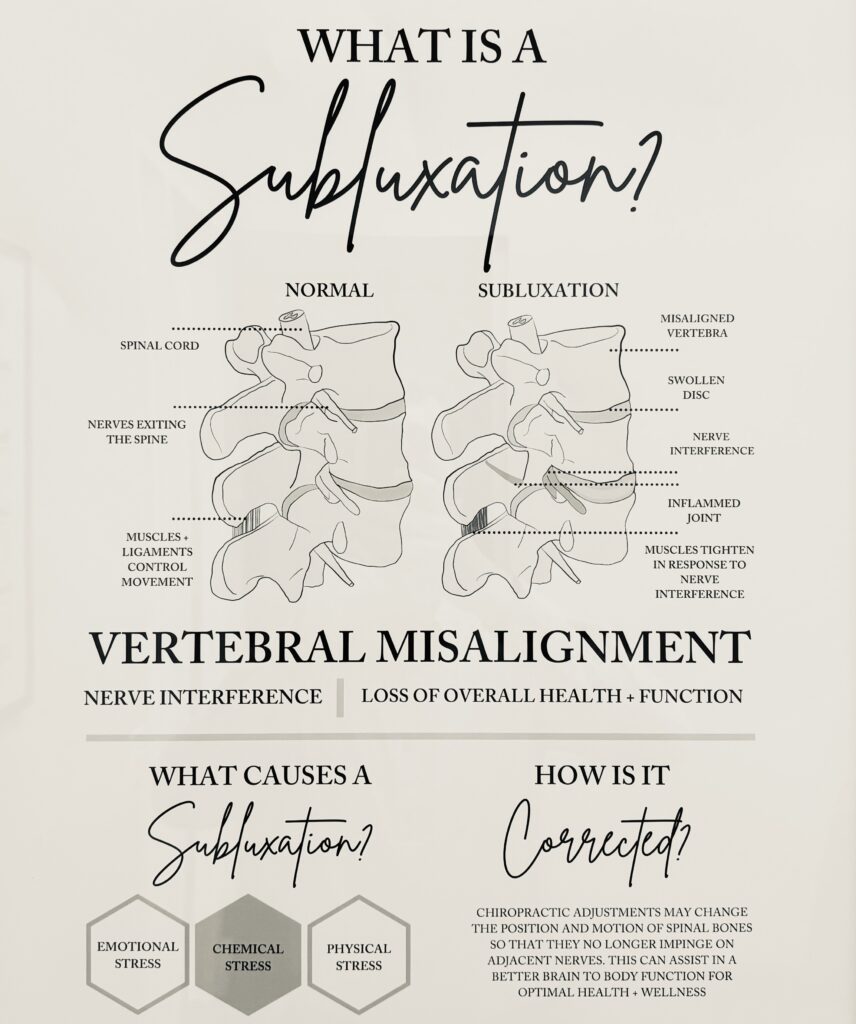
One of the most important things to understand about headaches — especially chronic, recurring headaches — is that the head is rarely the problem. The head is usually where you feel the pain, but the source of that pain is very often in the neck.
Here is why: The upper cervical spine — the C1 (Atlas) and C2 (Axis) vertebrae at the very top of the neck — are the most mobile and most complex joints in the entire spine. They also share neurological pathways with the trigeminal nerve, which is the primary sensory nerve of the head and face. When the joints of the upper cervical spine are restricted, misaligned, or under stress, they can create irritation in those shared nerve pathways that is perceived as head pain.
Additionally, the muscles of the upper neck — particularly the suboccipital muscles at the base of the skull — are directly connected to the dura mater, the protective covering of the brain and spinal cord. When these muscles are chronically tight and overloaded, they can create tension directly on the nervous system structures inside the skull — which many researchers believe is one of the key mechanisms behind both tension headaches and migraines.
Chiropractic adjustments work by restoring proper joint motion and alignment in the cervical spine, reducing muscular tension in the neck and upper back, and removing the neurological irritation that is feeding into the headache cycle. For many patients, this is the first time anyone has actually looked at the structural causes of their headaches — and it is the first approach that actually provides lasting results.
📊 A Duke University evidence report found chiropractic spinal manipulation produces markedly superior long-term results for cervicogenic headaches compared to drug therapy alone (McCrory & Gray, 2001).
📊 A study in the Journal of Manipulative and Physiological Therapeutics found chiropractic care reduced migraine frequency and severity on par with prescription medication — without side effects (JMPT, 1998).
📊 A 2021 randomized controlled trial of 199 children (ages 7–14) found spinal manipulation significantly reduced headache days and improved quality of life over a 4-month period (ChiroUp, 2024).
Headaches in Kids and Teens: A Growing Problem That Parents Need to Know About
If your child complains of headaches regularly, you are not alone — and you are not imagining it. Childhood headaches are more common than most parents realize, and they are increasing in prevalence as screen time rises and kids spend more hours in forward-flexed postures looking at tablets, phones, and computers.
“My 10-year-old was getting headaches almost every day after school. His pediatrician checked everything and said it was tension headaches from screen time and backpack weight. We tried chiropractic at a friend’s recommendation, and within a few weeks the headaches went from daily to maybe once every couple of weeks. I couldn’t believe it.” — Mom from Gilbert, AZ
Here is what parents in the East Valley need to know about headaches in kids:
Headaches Are Extremely Common in Children — and Often Undertreated
As mentioned earlier, headache prevalence in children increases dramatically through adolescence. Many kids are told to simply “take some Tylenol and rest,” but recurring headaches in children deserve a closer look. When a child is getting headaches multiple times per week, there is almost always an underlying structural or neurological contributor that is worth investigating.
The most common types of headaches in children and teens include tension-type headaches, cervicogenic headaches, and migraines. All three can have a significant cervical spine component — which is exactly what chiropractic care addresses.
The Modern Kid’s Spine Is Under More Stress Than Ever
Kids today are carrying heavy backpacks, spending hours on devices, and sitting in school chairs designed for adults. The forward head posture that results from these habits puts enormous strain on the developing cervical spine — often producing the same muscular tension and joint restriction patterns that drive headaches in adults.
Add youth sports, falls, and the general physical demands of childhood, and it is easy to see why so many kids in Gilbert, Chandler, Mesa, and Queen Creek are walking around with significant cervical spine tension that shows up as recurring headaches.
What the Research Says About Chiropractic and Pediatric Headaches
The research on chiropractic care for headaches in children is growing and encouraging. A 2021 randomized controlled trial involving 199 children between the ages of 7 and 14 found that spinal manipulation significantly reduced the number of headache days and produced significantly greater global improvement compared to control groups — with minimal side effects (ChiroUp, 2024).
A case report published in the Journal of the International Chiropractic Pediatric Association described a 6-year-old boy who had suffered from chronic cervicogenic headaches for 2 years. After 10 chiropractic visits over 2 months, his headaches resolved completely (Alcantara & Olsen, 2014).
Chiropractic care for children with headaches works the same way it does for adults: by identifying and reducing areas of cervical spine restriction, muscle tension, and nerve irritation that are contributing to the headache cycle. The techniques are adapted to be completely appropriate for the child’s age and size.
Signs That Your Child’s Headaches May Have a Cervical Spine Component
Consider bringing your child to a chiropractor in Gilbert if they are experiencing:
Headaches that occur regularly — more than once per week
Headaches that start at the back of the head or neck and move forward
Headaches that are worse after school, after screen time, or after carrying a heavy backpack
Headaches accompanied by neck stiffness or reduced ability to turn the head
Headaches that wake your child from sleep
Headaches that have not responded well to rest and pain medication
A child who seems to tilt their head to one side or holds their neck in an unusual position
Searching for a “kids headache chiropractor in Gilbert AZ,” “natural headache relief for children East Valley,” or “pediatric migraine chiropractor near me?” Centric Chiropractic works with children of all ages who are struggling with recurring headaches throughout Gilbert, Chandler, Mesa, and Queen Creek.
How Chiropractic Care Supports Headache Relief
Chiropractic care addresses headaches by working with the body’s own design — specifically the relationship between the spine, the nervous system, and the muscles of the head and neck. Here is what that looks like in practice at our Gilbert chiropractic clinic:
Cervical Spine Adjustments
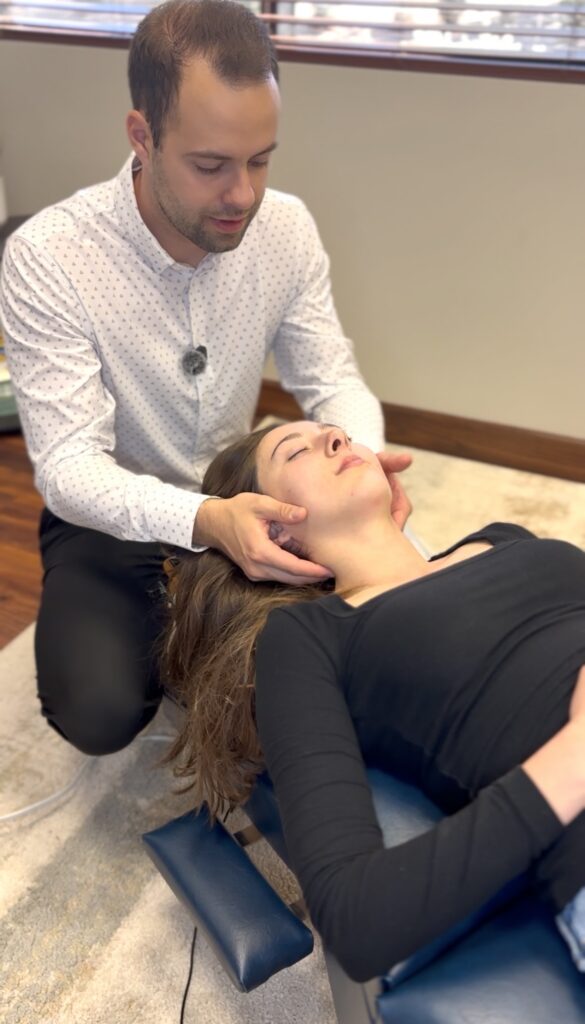
Specific adjustments to the joints of the cervical spine — particularly the upper cervical region — restore proper motion, reduce joint irritation, and remove neurological interference that is contributing to headache pain. For many patients, relief begins within the first few visits.
Upper Thoracic Spine Adjustments
The upper thoracic spine (mid-back) plays a major role in neck posture and the overall mechanical loading of the cervical spine. Restrictions in the upper thoracic spine are extremely common in headache patients and can be a significant driver of both tension headaches and cervicogenic headaches. Addressing thoracic mobility is often a critical part of an effective headache care plan.
Soft Tissue Work and Muscle Release
The muscles of the upper neck — particularly the suboccipital muscles, the upper trapezius, the levator scapulae, and the sternocleidomastoid (SCM) — are almost always involved in chronic headache patterns. Chiropractic care often incorporates soft tissue techniques to release tension in these muscles, which directly reduces the muscular component of headache pain.
Postural Correction and Lifestyle Guidance
Because forward head posture and poor ergonomics are such significant contributors to tension and cervicogenic headaches, an effective chiropractic headache care plan also addresses the habits and postures that are feeding into the problem. We provide specific guidance on workstation setup, screen habits, sleep positioning, and exercise to help you and your family make changes that support lasting headache relief.
Nervous System Support
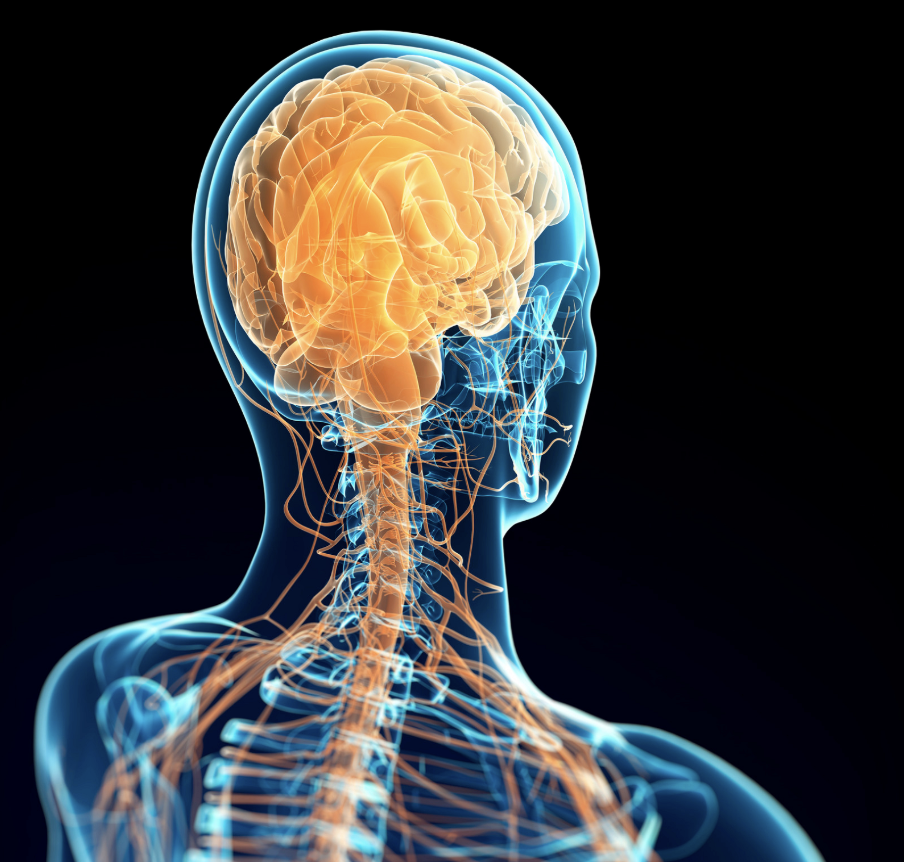
At its core, chiropractic care supports the nervous system’s ability to regulate, adapt, and function with less interference. When the spine is moving well and the nervous system has clear, unimpeded communication pathways, the body is better equipped to manage stress, reduce inflammatory responses, and maintain equilibrium — all of which play a role in headache prevention.
What Headache Patients at Our Gilbert Clinic Often Notice
Every patient is different, and we are careful not to make promises about outcomes. What we can share is what patients who come to Centric Chiropractic for headaches commonly report noticing over the course of their care:
Fewer headaches per week or per month — often within the first few weeks of care
Headaches that are less intense when they do occur
Headaches that resolve more quickly rather than lasting all day
Reduced reliance on pain medication for headache management
Improved neck range of motion and less stiffness
Better sleep quality — especially in patients whose headaches were disrupting sleep
Greater awareness of posture and early warning signs, allowing them to address tension before a full headache develops
In kids: more consistent energy at school, better mood, and improved ability to focus
We want to be clear: chiropractic care does not cure headaches, and results vary from person to person. What it does is address the structural and neurological factors that are contributing to your headaches — giving your body the best possible environment to regulate itself and find relief.
“I had been having migraines 2 to 3 times a week for years. I had tried everything my neurologist suggested. A friend in Chandler told me she’d had great results with chiropractic. I was skeptical because I’d never thought of migraines as a ‘neck problem.’ After 6 weeks of care, I was down to maybe one mild headache a month. It honestly changed my life.” — Patient from Gilbert, AZ
Important: When Headaches Require Immediate Medical Attention
Chiropractic care is a wonderful tool for chronic, recurring headaches — but it is important to know that some headaches require urgent medical evaluation. Please seek immediate medical care if you or your child experiences:
A sudden, severe headache described as the “worst headache of your life” (thunderclap headache)
Headache accompanied by fever, stiff neck, confusion, or sensitivity to light (possible meningitis)
Headache following a head injury or trauma
Headache with weakness, numbness, or difficulty speaking
Headache with vision changes or loss of consciousness
Headache in a very young child that is significantly different from usual
These can be signs of a serious medical condition that requires emergency care. When in doubt, always err on the side of caution and seek medical evaluation first. Chiropractic care is not a substitute for emergency medicine — and at Centric Chiropractic, we will always refer out to the appropriate provider if your presentation warrants it.
What to Expect at Your First Headache Consultation at Centric Chiropractic
When you come in for headaches — whether for yourself or your child — here is what the process looks like at our Gilbert clinic:
Step 1 — Thorough Headache History. We ask detailed questions about your headaches: how long you have had them, how often they occur, where the pain is located, what triggers them, what makes them better or worse, and what you have already tried. For kids, we also ask about their school setup, screen habits, backpack weight, and sleep patterns.
Step 2 — Cervical Spine and Postural Assessment. We evaluate the alignment and movement of your cervical and upper thoracic spine, assess your posture, and check the muscles of your neck and shoulders for tension and trigger points. We may take X-rays if needed to get a clearer picture of your spinal structure.
Step 3 — A Care Plan Specific to Your Headache Pattern. Not all headaches are the same, and not all headache care plans look the same. We build a plan around your specific headache type, your spinal findings, and your goals — whether that is short-term relief or long-term prevention.
Step 4 — Specific, Targeted Treatment. Most patients receive their first adjustment during the initial visit. We use specific techniques appropriate for your age and condition — focused on the areas of the cervical and thoracic spine most relevant to your headache pattern.
Centric Chiropractic is a cash-pay clinic in Gilbert, AZ — which means no insurance delays, no confusing bills, and no waiting for authorizations. You get straightforward care focused entirely on getting you and your family relief.
🧠 Ready to Get to the Root of Your Headaches? Call Centric Chiropractic Today.
You and your kids don’t have to keep living with recurring headaches. Whether you are dealing with daily tension headaches, debilitating migraines, or a child who comes home from school with a headache every afternoon — there is a better option. Call Centric Chiropractic in Gilbert, AZ today to schedule your consultation and find out if chiropractic care is the missing piece in your headache care plan.
References
World Health Organization. (2016). Headache disorders fact sheet. https://www.who.int/news-room/fact-sheets/detail/headache-disorders
American Migraine Foundation. (2024). Migraine facts. https://americanmigrainefoundation.org/resource-library/migraine-facts/
McCrory, D. & Gray, R. (2001). Evidence report: Behavioral and physical treatments for tension-type and cervicogenic headache. Duke University Evidence-Based Practice Center.
Journal of Manipulative and Physiological Therapeutics. (1998). Chiropractic care vs. amitriptyline for migraine headache: A randomized clinical trial. JMPT, 21(8), 511–519.
Alcantara, J. & Olsen, R. (2014). Spinal manipulation for a child with chronic cervicogenic headaches: A case report. The Journal of Headache and Pain, 15(Suppl 1), C2. https://doi.org/10.1186/1129-2377-15-S1-C2
ChiroUp. (2024). Chiropractic treatment: Headaches, migraines, and vertigo. https://chiroup.com/blog/chiropractic-treatment-of-cervicogenic-headaches-migraines-and-vertigo
Patil, D. S., Tikhile, P., & Gangwani, N. (2024). Effectiveness of nonpharmacological measures on improving headache score, strength, pain, and quality of life in cervicogenic headaches: A systematic review. Cureus, 16(3). https://doi.org/10.7759/cureus.57361