
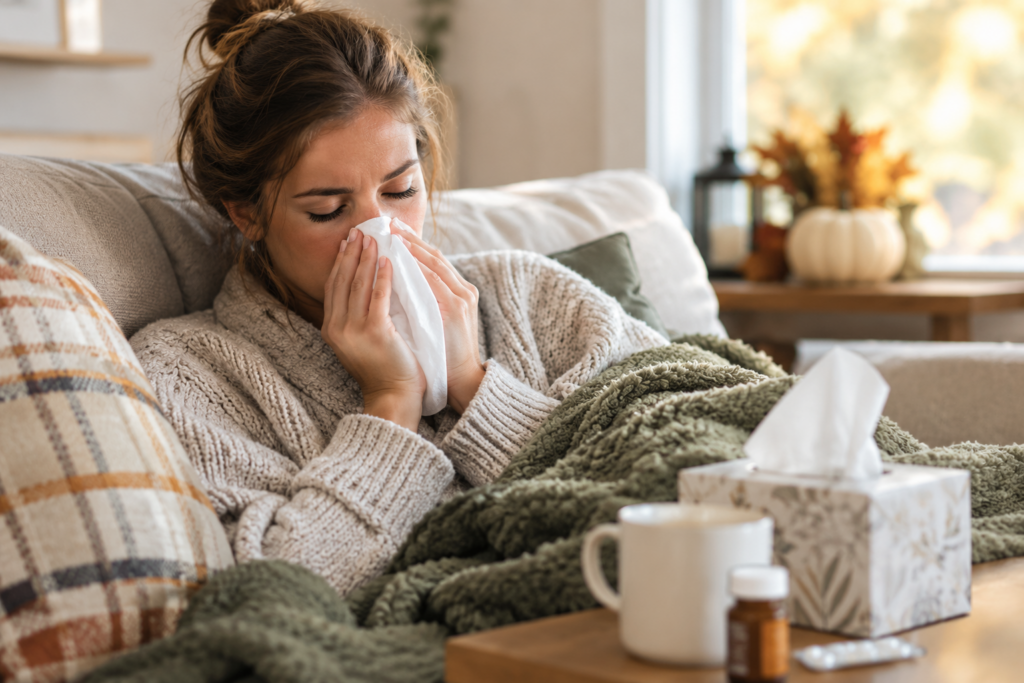

Fall Is Coming. Is Your Body Ready?
A Practical Guide to Fall Illness Prevention for Families in Gilbert, AZ — Including the Nervous System Connection Most People Have Never Considered
Centric Chiropractic | Gilbert, AZ | Serving Chandler, Mesa & Queen Creek
🛑 Scope of Practice Disclaimer
The information in this article is for educational and wellness purposes only and does not constitute medical advice. Chiropractic care, as practiced at Centric Chiropractic, does not diagnose, treat, prevent, or cure any disease or illness — including cold, flu, or any infectious condition. The relationship between chiropractic care and immune function is based on the established neurological connection between the nervous system and the immune system. Chiropractic care is not a substitute for medical care or vaccination guidance. If you or your family are experiencing illness, please consult your physician.
Even in Gilbert, Arizona — where fall looks less like crunchy leaves and more like the temperature finally dropping below 100 degrees — the seasonal shift in September and October brings something predictably unwelcome to households across the East Valley: the fall sick season.
Kids go back to school and within two weeks someone comes home with a runny nose. The office cold makes its rounds. Allergies flare. Energy dips. And families who were thriving in summer find themselves in the exhausting cycle of sniffles, missed school days, and parents pushing through workdays feeling half functional.
It does not have to be that way.
Fall illness is not inevitable. The people who sail through cold and flu season — who do not catch every bug their kids bring home from school, who recover in two days instead of two weeks — are not just lucky. They are doing specific things to support the body’s resilience. And one of the most powerful and underappreciated of those things is caring for the nervous system.
At Centric Chiropractic in Gilbert, Arizona, we take a whole-body approach to seasonal wellness. This post breaks down why fall illness happens, what you can do proactively to reduce your family’s susceptibility, and where chiropractic fits into the immune resilience equation — with the science to back it up.
Why Fall Is Sick Season — Even in Arizona
Let’s understand what actually drives the fall sick season, because the common explanation — “it’s cold so people get colds” — is only partially right.
People Move Indoors
As temperatures drop and school resumes, people spend significantly more time indoors in close proximity to others. Enclosed classrooms, offices, and homes with recirculated air create the perfect environment for respiratory viruses to spread. In Gilbert and the East Valley, the shift from outdoor living to more indoor activity in September and October coincides almost exactly with the beginning of the cold and flu season.
Viral Survival Improves in Cooler, Drier Air
Respiratory viruses like rhinovirus (the common cold) and influenza survive longer and travel further in cool, dry air than in warm, humid conditions. Even in a desert climate, the drop in temperature and relative humidity that comes with Arizona fall creates a more virus-friendly environment than summer’s heat. Outdoor activity that naturally disperses viral particles is reduced, while indoor air keeps them concentrated.
Vitamin D Levels Drop
Vitamin D is one of the most critical regulators of immune function in the human body — and it is produced in the skin through direct sunlight exposure. During summer in Gilbert, even moderate outdoor time provides adequate UV exposure for Vitamin D synthesis. As the days shorten in fall and families spend more time indoors, Vitamin D levels begin to drop for many people. Research consistently links low Vitamin D status with increased susceptibility to respiratory infections, more severe illness, and longer recovery times.
📊 A 2022 meta-analysis of 46 randomized controlled trials found that regular Vitamin D supplementation reduced the risk of acute respiratory infection by 19% overall, with significantly greater protection in individuals who were Vitamin D deficient at baseline (Jolliffe et al., The Lancet Diabetes & Endocrinology, 2021).
Stress Accumulates
Back-to-school season is one of the most stressful times of year for families. New schedules, new academic demands, activity logistics, financial pressures, and the general upheaval of transition all activate the sympathetic nervous system — the body’s stress response branch. Chronic sympathetic activation suppresses immune function. The stress hormones cortisol and adrenaline, while valuable in short-term acute stress situations, downregulate immune surveillance and inflammatory resolution when they are chronically elevated. The family that enters fall already running on empty is the family that gets hit hardest by the first bug of the season.
Sleep Quality Declines
Back-to-school early wake times, later bedtimes from homework and activities, and the cumulative sleep debt of the transition period all reduce the quality and quantity of sleep for both children and adults. Sleep is when the immune system does its most critical organizational work — producing cytokines, consolidating immune memory, and restoring the regulatory balance that keeps immune function sharp. Even a single night of poor sleep measurably reduces natural killer cell activity. A family running on chronic sleep debt is a family with a compromised immune front line.
Fall illness is not primarily about exposure to germs. It is about the state of the host. You are exposed to viruses constantly — the question is whether your immune system is operating at the level of vigilance and efficiency needed to neutralize them before they take hold. Every proactive step in this post is about raising that baseline.
Positive Steps Your Family Can Take Right Now
Here is the good news: you are not powerless against fall illness. The following evidence-backed strategies, when implemented consistently, meaningfully shift the odds in your family’s favor.
😴 1. Prioritize Sleep Above Everything Else
If you do one thing from this entire list, make it this. Sleep is the single most powerful immune-supporting intervention available, and it costs nothing.
· Adults need 7 to 9 hours of quality sleep per night. Children need more — school-age kids need 9 to 11 hours, adolescents need 8 to 10 hours
· Create consistent bedtimes and wake times, even on weekends, to regulate circadian rhythm and improve sleep quality
· Remove screens from bedrooms and establish a 30- to 60-minute no-screen wind-down before bed — blue light exposure suppresses melatonin and delays sleep onset
· Keep bedrooms cool and dark — the optimal sleep environment for immune recovery
✅ Fall Action Step: Audit your family’s sleep schedule before the busy season takes over. Set non-negotiable bedtimes for the kids and honor them even when extracurricular schedules push back. Sleep debt compounds — so does the illness that follows it.
☀️ 2. Get Serious About Vitamin D
Arizona sunshine is one of the East Valley’s greatest health assets — but most families are not getting enough direct sun exposure on enough skin surface area to maintain optimal Vitamin D levels year-round, especially as schedules shift indoors in fall.
· Ask your physician to check your family’s Vitamin D levels with a simple blood test at the beginning of fall — many people in the Phoenix area are deficient despite living in a sunny climate due to sunscreen use, indoor lifestyles, and limited midday sun exposure
· Supplementation with Vitamin D3 (combined with Vitamin K2 for optimal absorption and utilization) is widely recommended by integrative health practitioners for fall and winter
· The optimal target for immune function is generally considered to be a serum 25(OH)D level between 50 and 80 ng/mL — most people without supplementation are well below this range
✅ Fall Action Step: Have the whole family’s Vitamin D tested. It is a simple, inexpensive blood test. The results are almost always eye-opening. Work with your physician to determine appropriate supplementation levels for each family member.
🥦 3. Feed the Immune System What It Needs
The immune system is not a separate department from your diet. It is built from the nutrients you eat and maintained by the ongoing nutritional environment of your body. Fall immune resilience starts at the dinner table.
· Prioritize colorful vegetables and fruits high in Vitamin C, zinc, and antioxidants: bell peppers, citrus, leafy greens, berries, broccoli, and sweet potatoes are all fall staples with significant immune-supporting nutrient profiles
· Include zinc-rich foods regularly: pumpkin seeds (perfect for fall!), legumes, eggs, meat, and shellfish all provide the zinc that is essential for immune cell production and function
· Reduce ultra-processed foods and added sugar: research consistently shows that high sugar intake suppresses neutrophil function — the immune cells that first responders to bacterial and viral invasion — for several hours after consumption
· Support the gut microbiome with fermented foods (yogurt, kefir, sauerkraut, kimchi) and prebiotic fiber (garlic, onions, oats, bananas) — because approximately 70% to 80% of the immune system is housed in the gut
✅ Fall Action Step: Do a one-week pantry audit. Replace the most processed, highest-sugar snacks with whole-food alternatives. It does not have to be perfect — even modest improvements in nutritional quality make a meaningful difference over the course of a season.
💧 4. Hydrate More Than You Think You Need To
Hydration is one of the simplest and most consistently underutilized immune supports available. The mucous membranes of the nose, throat, and airways are the body’s first physical barrier against respiratory viruses. When those membranes are well-hydrated, they trap and neutralize viral particles effectively. When they are dry — as is common in the desert climate of Gilbert and the East Valley, especially as indoor heating kicks in — their barrier function is significantly compromised.
· The general guideline of half your body weight in ounces of water per day is a reasonable starting point for most adults
· Herbal teas — particularly elderberry, echinacea, and ginger — contribute to hydration while providing additional immune-supportive phytochemicals
· Limit alcohol and caffeine during the peak sick season, as both contribute to dehydration and can blunt immune response
✅ Fall Action Step: Keep a water bottle visible and accessible throughout the day. For kids, make it fun — a water bottle they chose, a hydration chart, or a family challenge. The households that hydrate well are the ones that get sick less.
🏃 5. Keep Moving — But Don’t Overdo It
Moderate, consistent physical activity is one of the best-studied immune modulators available. Exercise improves the circulation of immune cells, enhances natural killer cell activity, reduces systemic inflammation, and supports the quality of sleep that the immune system depends on.
· Aim for at least 30 minutes of moderate-intensity movement most days of the week — brisk walking, cycling, swimming, or recreational sport all count
· Gilbert’s fall weather is one of the best arguments for outdoor movement — use it. Walking the San Tan trails, evening bike rides, or recreational sports in the park all combine the immune benefits of movement with the Vitamin D and mood benefits of outdoor time
· Avoid the trap of extreme exercise during periods of high stress or early illness — very high-intensity training can temporarily suppress immune function and should be moderated when the body is under other forms of stress
✅ Fall Action Step: Build one family outdoor activity per week into the fall schedule. The movement is medicine. The fresh air and natural light are bonuses. The time together is the gift.
🤧 6. Support the Gut
The relationship between gut health and immune function is one of the most significant findings in immunology research over the past two decades. The gut-associated lymphoid tissue (GALT) represents the largest collection of immune cells in the entire body — and the diversity and health of the gut microbiome directly influences the readiness and precision of the immune response.
· A high-quality probiotic supplement, especially one containing Lactobacillus and Bifidobacterium strains, supports microbiome diversity and has been shown to reduce the incidence and duration of upper respiratory infections
· Prebiotic fiber from vegetables, legumes, and whole grains feeds the beneficial bacteria that keep the gut ecosystem healthy and the GALT primed
· Minimize antibiotic use to situations where it is genuinely necessary — unnecessary antibiotic courses disrupt the gut microbiome in ways that can impair immune function for months
📊 A Cochrane review of 12 randomized controlled trials found that probiotic supplementation reduced the incidence of upper respiratory tract infections and shortened their duration compared to placebo, particularly in children (Hao et al., Cochrane Database, 2022).
🧘 7. Actively Manage Stress
Chronic stress is one of the most powerful suppressors of immune function known. The mechanisms are direct and well-established: cortisol and other stress hormones downregulate the production and activity of multiple immune cell types, impair the inflammatory resolution process, and suppress the production of secretory IgA — the antibody that lines the mucous membranes of the respiratory tract and is the first line of defense against airborne pathogens.
· Identify the highest-stress pressure points in your family’s fall schedule and build in deliberate recovery time — downtime, unscheduled evenings, weekends without commitments are not laziness, they are immune maintenance
· Breathwork, meditation, prayer, journaling, time in nature — any consistent practice that activates the parasympathetic nervous system and lowers cortisol has direct immune benefits
· Pay attention to your children’s stress levels as well as your own. Back-to-school anxiety, social pressure, and academic demands can dysregulate a child’s nervous system and immune function just as profoundly as adult work stress
The Chiropractic Connection: Why Your Nervous System Is Part of This Conversation
Everything we have covered so far — sleep, stress, nutrition, movement — influences immune function through the nervous system. Which means the state of your nervous system is the common thread running through every strategy on this list.
The immune system and the nervous system are not separate departments in separate wings of the body. They are deeply, bidirectionally integrated. They share signaling molecules, receptor types, and regulatory feedback loops. Nerve signals directly influence how immune cells are produced, where they are deployed, how aggressively they respond, and how completely they stand down after the threat has passed.
When the nervous system is operating under interference — specifically the kind created by vertebral subluxation in the spine — that immune-nervous system communication is degraded. The immune system receives a less precise, less complete regulatory signal. It may underrespond to a genuine threat. It may struggle to fully resolve an inflammatory response. It may take longer to clear an infection and return to baseline.
When the spine is free of subluxation and the nervous system is communicating clearly, the immune system is better positioned to do its job with the precision and speed it was designed for.
📊 A 2018 review published in Annals of Vertebral Subluxation Research examined the relationship between chiropractic care and immune function, finding that spinal adjustment influences immune response through the neuro-immune interface, including effects on interleukin levels, natural killer cell activity, and immunoglobulin production (Teodorczyk-Injeyan et al., 2018).
📊 A 2024 integrative review published in Cureus concluded that chiropractic adjustments have measurable effects on the neuroendocrine-immune (NEI) system, supporting shifts toward parasympathetic nervous system dominance and reducing markers of chronic stress physiology — both of which directly support immune function (Haas et al., 2024).
At Centric Chiropractic in Gilbert, we frequently hear from long-term wellness patients that since beginning regular chiropractic care, they get sick less often, recover faster when they do, and feel more physically resilient going into the fall and winter months. We do not make claims about chiropractic as an immune treatment. What we observe is that a nervous system consistently supported through subluxation correction tends to regulate the body — including the immune system — more effectively.
Chiropractic care does not treat, prevent, or cure any illness or infection. What it does is support the nervous system’s ability to regulate the body — including the immune system — by removing the interference created by vertebral subluxation. When the nervous system has a clear signal, the immune system has a better environment in which to do its own work.
Searching for a “wellness chiropractor in Gilbert AZ,” “natural immune support Gilbert,” “chiropractic and immune health East Valley,” or “family wellness chiropractor near me in Gilbert Arizona?” Centric Chiropractic in Gilbert offers wellness-focused chiropractic care for families across the East Valley who want to take a proactive approach to their health this fall.
Putting It All Together: A Simple Fall Wellness Game Plan for East Valley Families
You do not need to do everything on this list perfectly. You need to do enough of it consistently. Here is how to think about building a fall wellness routine for your family:
This Week
· Set consistent bedtimes for every member of your household and stick to them for two weeks before evaluating
· Add one more serving of vegetables to the family’s daily diet
· Refill and use water bottles consistently throughout the day
· Schedule 20 minutes of outdoor movement three times this week
· Book a chiropractic wellness check-in at Centric Chiropractic to start fall with a clear nervous system
This Month
· Ask your doctor about Vitamin D testing for the family
· Add a high-quality probiotic to the family’s routine
· Look at your fall schedule and identify one thing to remove or reduce to create breathing room
· Establish one screen-free, wind-down routine before bed for the kids
This Season
· Maintain a monthly chiropractic wellness visit for the whole family
· Keep the pantry stocked with immune-supportive whole foods as a default
· Prioritize sleep ruthlessly — let the dishes wait, let the email wait, let the extra activity go
· Model stress management and recovery for your children — they are watching how you handle the demands of the season
“We used to lose at least one week per family member every fall to colds. After we got the whole family on a wellness chiropractic schedule, cleaned up the diet a bit, and got serious about sleep — last fall was the first year in memory that we made it from September to January without anyone getting really sick. I am not saying it was any one thing. But the combination has been remarkable.” — Mom of three, Gilbert, AZ
🍂 Start Fall Strong. Your Family’s Wellness Is Worth the Investment.
Fall does not have to mean sick season for your household. Call Centric Chiropractic in Gilbert, AZ today to schedule your family’s fall wellness visit. A clear nervous system, a supported immune system, and a few intentional habits can make this your healthiest fall yet. We serve families across Gilbert, Chandler, Mesa, and Queen Creek and we are ready to support yours.
References
Jolliffe, D. A., et al. (2021). Vitamin D supplementation to prevent acute respiratory infections: A systematic review and meta-analysis of aggregate data from randomised controlled trials. The Lancet Diabetes & Endocrinology, 9(5), 276–292. https://doi.org/10.1016/S2213-8587(21)00051-6
Hao, Q., et al. (2022). Probiotics for preventing acute upper respiratory tract infections. Cochrane Database of Systematic Reviews. https://doi.org/10.1002/14651858.CD006895.pub4
Haas, A., et al. (2024). Vertebral subluxation and systems biology: An integrative review exploring the salutogenic influence of chiropractic care on the neuroendocrine-immune system. Cureus, 16(3), e56223. https://doi.org/10.7759/cureus.56223
Teodorczyk-Injeyan, J. A., et al. (2018). Spinal manipulative therapy reduces inflammatory cytokines but not substance P production in normal subjects. Journal of Manipulative and Physiological Therapeutics, 29(1), 14–21.
Prather, A. A., et al. (2015). Behaviorally assessed sleep and susceptibility to the common cold. Sleep, 38(9), 1353–1359. https://doi.org/10.5665/sleep.4968
Harvard T.H. Chan School of Public Health. (2024). The nutrition source: Immunity. https://www.hsph.harvard.edu/nutritionsource/nutrition-and-immunity